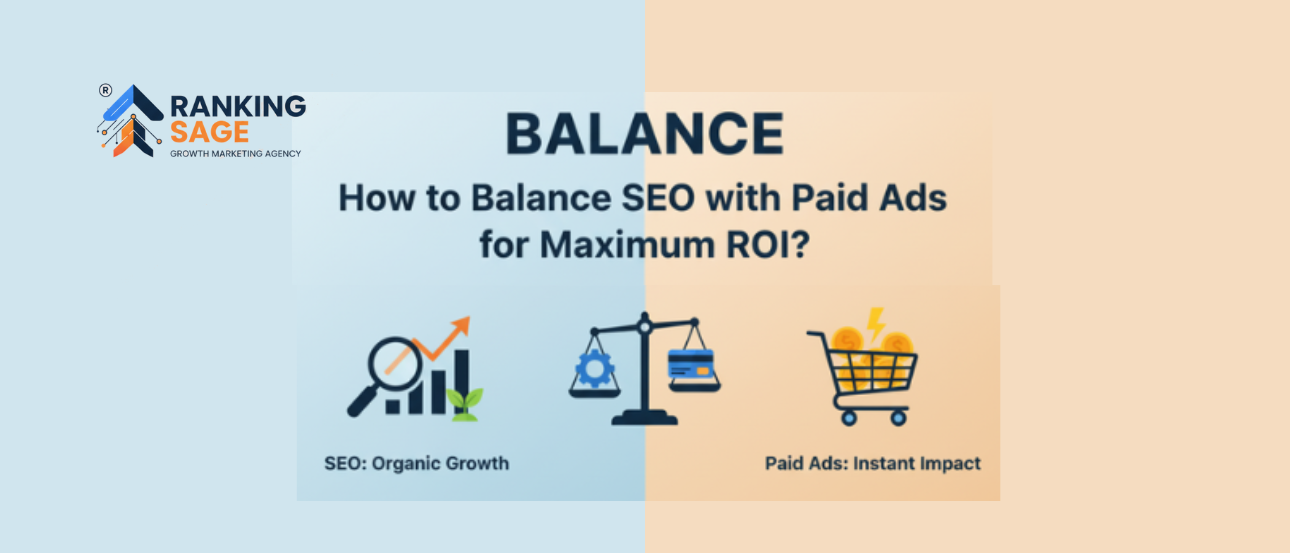
In the world of digital marketing, it can feel like you have to choose a side: do you focus on the long-term, organic growth of Search Engine Optimisation (SEO), or the quick, targeted results of Paid Ads (also known as Pay-Per-Click, or PPC)?
The truth is, this isn’t an either/or situation. The most successful businesses don’t just pick one. They use a smart, integrated strategy that balances SEO and paid ads to create a powerful, two-pronged approach. By understanding the unique strengths of each and using them together, you can dominate the search results, attract more qualified traffic, and achieve a higher Return on Investment (ROI).
Why Balance SEO with Paid Ads?
Relying on a single digital marketing channel is like trying to drive with only one hand on the wheel—you might get somewhere, but you’re missing out on stability and control.
SEO and paid ads have different, but complementary, strengths:
- SEO is about building a strong foundation. It’s a long-term strategy that helps you earn authority and visibility over time. It’s an investment that pays off with sustainable, compounding organic traffic.
- Paid Ads offer immediate visibility and precise targeting. They allow you to get your message in front of a specific audience instantly and can be easily scaled up or down based on your budget and goals.
By combining the two, you can capture both long-term growth and short-term wins, creating a robust marketing engine that’s more resilient and effective.
Key Differences: SEO vs. Paid Ads
Understanding the fundamental differences between SEO and PPC is the first step to a balanced strategy.
- Cost and Investment: SEO is generally seen as a more cost-effective long-term strategy, though it requires a significant time investment in content creation and link-building. Paid ads have a direct cost per click, which means you pay for every visitor you get. This makes them more expensive on a per-visitor basis but gives you immediate control over your spending.
- Time to See Results: Paid ads can generate traffic and conversions as soon as your campaign goes live. SEO, on the other hand, can take months to show significant results, as search engines need time to crawl, index, and rank your content.
- Scalability and Sustainability: You can easily scale a paid ad campaign by increasing your budget. However, once you stop paying, the traffic stops. SEO traffic, once you’ve earned it, is more sustainable. Your content can continue to bring in organic visitors for years without a direct cost per click.
Benefits of Integrating SEO and Paid Ads
When you stop viewing these channels as separate entities and start seeing them as parts of a single, unified strategy, you unlock some powerful benefits.
- Maximizing Visibility in SERPs: By ranking organically and running paid ads for the same keywords, you take up more space on the Search Engine Results Page (SERP). This “double-dip” strategy significantly increases your chances of getting a click.
- Improving Brand Authority and Trust: Seeing your brand both in the top paid ad spot and in the organic results builds trust and credibility with users. It sends a message that you are a dominant and authoritative voice in your industry.
- Gathering Better Audience Insights: PPC campaigns generate a wealth of data in a short amount of time. You can use this data—like which keywords convert best, what ad copy resonates, and which audiences are most responsive—to refine and improve your long-term SEO content strategy.
- Increasing Conversion Opportunities: You can use paid ads to target high-intent, bottom-of-funnel keywords while using your SEO efforts to create informative, top-of-funnel content that attracts new audiences and builds brand awareness. This creates a complete funnel that guides users from discovery to conversion.
Strategies to Balance SEO with Paid Ads
Here’s how to put it all together with actionable strategies.
Target High-Converting Keywords with PPC
Instead of trying to rank for every keyword under the sun, use PPC to target keywords with high commercial intent—those where users are ready to buy. This gives you an immediate ROI and allows you to test which keywords are most profitable before dedicating long-term SEO resources to them.
Use SEO for Long-Term Organic Growth
Focus your SEO efforts on broader, informational keywords that build brand authority and attract a wider audience. This content, often in the form of blog posts and guides, can answer common questions and establish your site as a valuable resource, generating traffic and leads for years to come.
Leverage PPC Data to Refine SEO Strategy
Your paid ad campaigns are like a fast-paced lab. Analyze which ad copy gets the most clicks, which keywords have the highest conversion rates, and what landing pages perform best. Use these insights to inform your SEO content, title tags, and meta descriptions. If a keyword is a big winner in your PPC campaign, make it a priority for your SEO strategy.
A/B Testing and Performance Tracking
Use both channels to conduct A/B tests on landing pages, ad copy, and calls to action. Track the performance of both organic and paid traffic through a unified analytics platform like Google Analytics. This gives you a complete picture of your ROI and helps you identify where to allocate your resources for the best results.
Measuring ROI from SEO and Paid Ads
To know if your strategy is working, you need to track the right metrics.
- Key Performance Indicators (KPIs): Don’t just look at clicks. Track metrics like conversion rate, cost per conversion, customer lifetime value, and keyword rankings.
- Attribution Models: Understand that a user may see your paid ad and later convert through an organic search. Use multi-touch attribution models to accurately measure the impact of both channels and understand their roles in the customer journey.
- Balancing Short-Term Wins with Long-Term Gains: While you can easily see the ROI of a PPC campaign in a few weeks, the ROI of SEO can take much longer to calculate. Don’t be discouraged by the slow start. The long-term, compounding benefits of organic traffic are well worth the initial investment.
Common Mistakes to Avoid
A balanced strategy is only effective if you avoid these common pitfalls.
- Over-Investing in One Channel: Putting all your eggs in one basket is a risky move. An algorithm update could wipe out your organic traffic, or a sudden increase in ad costs could make your PPC campaigns unprofitable.
- Ignoring Cross-Channel Insights: Failing to use the data from one channel to improve the other is a wasted opportunity. Your PPC data is a goldmine for your SEO team, and vice versa.
- Failing to Track Conversions Properly: If you don’t have accurate conversion tracking set up, you won’t know which campaigns are actually driving revenue. Make sure your analytics are configured correctly to measure the true ROI of your efforts.
Final Thoughts
The key to a successful digital marketing strategy is not choosing between SEO and paid ads, but rather in creating a synergistic relationship between them. By using paid ads for immediate visibility and testing, and leveraging SEO for sustainable, long-term growth, you can build a marketing engine that maximizes traffic, conversions, and most importantly, ROI.
Start by analyzing your current marketing efforts, identify opportunities to integrate your SEO and PPC strategies, and remember that continuous testing and optimization are the keys to long-term success.